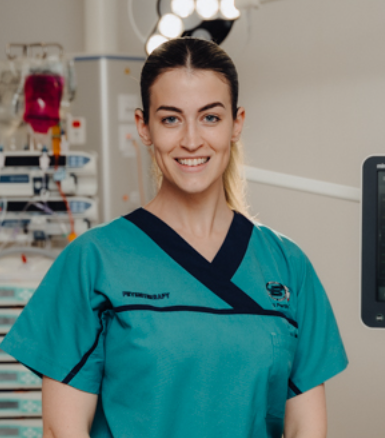
Over a decade ago, I first stepped foot onto an intensive care unit in Western Australia as a (relatively) fresh-faced physiotherapist. I was instantly in awe of what I saw. It reminded me of what I can only imagine a space station might be like: experts in uniform huddled around machines, tubes, and pumps, quiet discussions at bedsides, everybody moving in coordination and with a sense of urgent determination… I was hooked immediately. It wasn’t long before I became fascinated with the bedside ventilator – the waveforms, the real-time data, the way it could tell you so much about a system that you could see and hear but not see (not in the old days anyway). I was drawn to how ventilation strategies evolved in response to physiology, clinical presentation, and, like it or not, clinician preference.
As my career progressed, my focus shifted. I began to look beyond the bedside machine and towards the individual at the end of the tube.
Ventilation therapy, at its core, should be personalised. The incredible patients I have had the privilege of working with taught me that successful ventilation, whether that be acute management, weaning and liberation, or long-term adoption, is influenced by far more than settings and modes. An individual’s prehospital journey, chronic health conditions, current diagnosis, physical capacity, cognitive status, psychological well being, previous health care experiences, cultural beliefs, and support network can all shape their outcomes. These factors are not peripheral; they are central to high-quality care.
Equally important is the team. Ventilation does not exist in isolation. A starving patient will not succeed. Poorly maintained equipment will fail. Lack of communication leads to unintended harm. And poor teamwork creates more work. Every member of the multidisciplinary team plays a vital role in delivering effective ventilation management and care.
I founded WAVE to bring all of these elements together: the science, the individual, and the team. WAVE is person-centered, journey-focused, and grounded in the reality of real-life clinical practice. It is about education that respects complexity, values team collaboration, and recognises that excellent ventilation therapy extends far beyond the machine.
Working in Western Australia reinforces the importance of this approach. With vast distances and limited access to tertiary-level care for much of our regional population, getting it right matters, every time. WAVE exists to support all clinicians, regardless of location, to do exactly that.
Finally, WAVE is for my mentors – Steve, Tim, Andy, Julian, Emily & Erin. And above all, for Colin.